Apps that work for you: what "agentic" means on adoovi
Most software waits for you to click. An adoovi app can own workflows, do recurring work on the engine that built it, and announce itself to other agents.

Apps that work for you
Almost all software is idle almost all the time. It renders a page, waits for a click, renders another page. The work between sessions — the checking, the refreshing, the analyzing, the generating — stays yours.
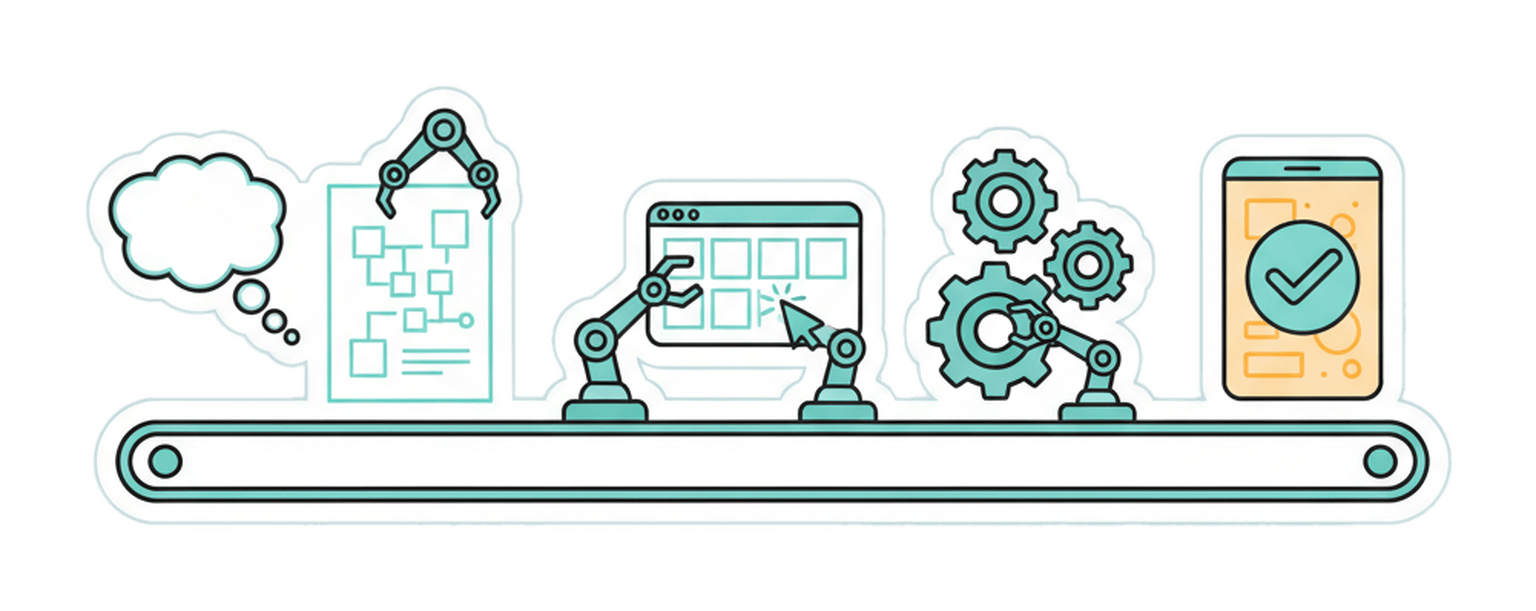
The apps mr-bill builds don't have to accept that deal. On adoovi, a built app can be agentic: it can own workflows and run them itself, on the same engine that built it.
What that looks like in practice
An agentic app has three habits ordinary software doesn't:
- It does recurring work without being asked. Our sports research app runs
its analysis workflow every morning against fresh odds data. Nobody clicks anything. The results are simply there.
- It uses AI as a runtime capability. The content studio doesn't just
store your drafts — it dispatches image and video generation to mr-bill when you ask, from inside the app. The build engine becomes the app's engine.
- It announces itself to machines. Every adoovi app publishes a
machine-readable description of what it is and what it can do, at a standard, well-known address. A person reads your store page; an agent reads your app's self-description. Both find you.
Why this needed a platform
You can't bolt this onto a code snippet, and that's the point.
For an app to run a workflow, there has to be a workflow engine that outlives the build — with scheduling, orchestration, observability, and metering. For the work to be trustworthy, every run needs to be recorded and replayable, the same as build runs are. For the economics to be sane, the work has to draw on the same transparent wallet, so an app that works for you nightly shows you exactly what that work costs.
adoovi has all of that because building apps already required it. The leap to agentic apps isn't a second system — it's the same system, kept running after launch. The run that builds your app and the run that does your app's nightly analysis are the same kind of thing, visible in the same places, priced in the same tokens.
Where this is heading
Today, an app's workflows are established when the app is built or iterated — you describe the recurring behavior you want, and mr-bill wires it in. The direction we're building toward is more direct: you authoring and customizing your app's workflows yourself, from the app, the way you'd edit a document. Change the schedule. Change what the analysis considers. Add a step. The app you described becomes a system you direct.
We think this is where the last few years of AI actually land for most people — not a chat window you visit, but software of your own that quietly gets things done and can show you its work.
The gap between "an app" and "an employee" is smaller than it used to be. Describe one and see.