
Software engineering, ready for everyone
Why we believe the unit of progress is not the code snippet but the engineering workflow — and what changes when everyone has one.
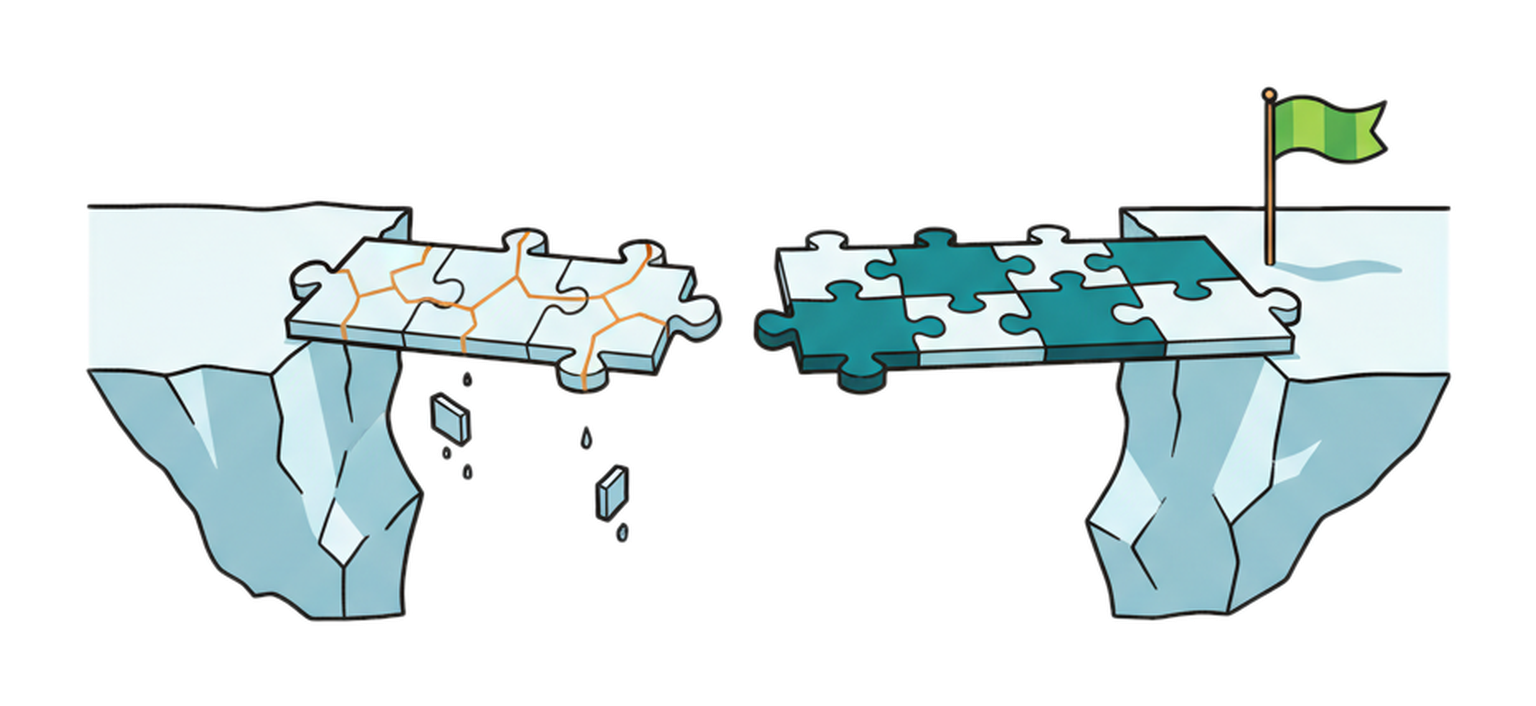
There's a moment everyone with an idea knows well. You can see the thing — the tool your team needs, the app your customers would love, the tracker that would fix your week. You can describe it in two sentences. And then you hit the wall: to make it real you need an engineering team, or you need to become one.
For seventy years the answer has been "learn to code or pay someone who did." The last few years added a third option — "ask an AI for code" — and it's an honest half-step. You get code. You also get everything that comes with owning code you didn't write: figuring out where to run it, what broke, whether it's safe, and who fixes it when the world changes.
We think the framing is wrong. The thing people need is not code. It's engineering.
Snippets vs. workflows
Watch what a good engineering team actually does with a request. They don't type until the feature falls out. They clarify requirements. They sketch and argue about the shape of the thing. They write code, and then — this is the part that makes it engineering — someone else reads it, adversarially, looking for what's wrong. They test. They deploy. They watch it run.
That loop is the unit of value. Any one step in isolation is close to worthless; snippet generators prove this daily.
So that loop is what we built. mr-bill — adoovi's build engine — is an orchestrator that runs the whole loop as a workflow: it plans the work, dispatches it to frontier AI models, has the output reviewed by separate AI reviewers whose only job is to find problems, runs the tests, and deploys the result as a live service. Every run is recorded. You can open any build and see what was decided, what was written, what the reviewers flagged, and what it cost.
The difference shows up in what you receive. Not "here's some code, good luck" — but a working application with a database, an API, and an interface, already running, with its lineage attached.
What "for everyone" actually means
We chose the tagline carefully. "Everyone" is not a euphemism for "junior developers." We mean:
- The person with an idea and no technical background. You describe, you react to a prototype, you get an app. You never see a stack trace unless you ask to.
- The team that needs internal tools but will never get a platform group. Company accounts, roles, and private apps are first-class on adoovi — not an enterprise upsell.
- The builder who wants leverage. If you are technical, adoovi doesn't hide the engineering from you — it shows you more of it than most tools do. Requirements are documents you can edit. Builds are runs you can watch. The output is a real service you can inspect.
The honest part
Engineering costs compute — real models doing real work — and we'd rather show you that than hide it in a subscription. adoovi meters everything in mr-bill tokens, shows you per-app breakdowns, and never charges you for work that didn't happen. When a build is running, you can watch the meter. When it's done, you can see where every token went.
We think trust is the actual product of an engineering process. The review step, the observable runs, the transparent meter — they're all the same decision made three ways.
Where this goes
Today, mr-bill builds software. The apps it builds can already keep working after launch — running their own recurring workflows on the same engine. The next step is letting you author those workflows yourself, so the app you described becomes a system you direct.
Software engineering, ready for everyone. We mean the whole phrase.